Matcha: Grades, Taste, Color & Cultivars
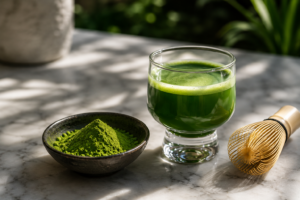
Matcha is one of Japan’s most distinctive teas. Unlike ordinary green tea, where the leaves are infused and removed, matcha is made from finely ground tea leaves that are whisked directly into water. This gives matcha its characteristic vivid green color, creamy texture, concentrated aroma and rich umami taste. But not all matcha tastes—or looks—the same. Its quality is influenced by the tea cultivar, growing region, shading, harvest, processing and blending.
Matcha Grades
You will often see matcha marketed as ceremonial, premium or culinary grade. These terms are useful for customers, but they are important to understand correctly: there is no universal Japanese grading standard that officially defines “ceremonial grade.” Quality is better judged by the raw material, harvest, cultivar, processing, color, aroma and taste.
Ceremonial-Style Matcha
This generally describes high-quality matcha intended to be whisked with water and enjoyed on its own.
It should have a smooth texture and a good balance of umami, sweetness and gentle vegetal notes, with relatively low harshness.
Best for: Usucha (thin matcha), traditional preparation and drinking without milk.
Typical taste: Umami • Sweet • Creamy • Fresh • Smooth
Premium / Everyday Matcha
A versatile matcha positioned between top drinking matcha and culinary products. Good examples can still be enjoyed with water but are also excellent for modern café drinks.
Best for: Everyday matcha, iced matcha, matcha latte and smoothies.
Typical taste: Fresh • Vegetal • Mildly sweet • Balanced bitterness • Umami
Culinary Matcha
Culinary matcha is generally selected for recipes where the tea needs enough intensity to remain noticeable alongside milk, sugar, chocolate or other ingredients.
It may be more bitter or astringent and less delicate than premium drinking matcha, but culinary does not automatically mean poor quality.
Best for: Matcha latte, cakes, cookies, ice cream, chocolate and desserts.
Typical taste: Bold • Vegetal • Earthier • More bitter • Astringent
High-quality matcha is generally bright, vivid green, sometimes with emerald or deep jade tones. The color comes largely from chlorophyll and other pigments in the leaves, and shading encourages the deep green appearance associated with quality tencha.